




SANDVIKA RAILWAY STATION | LOCATION: LEIF TRONSTADS PLASS 5, SANDVIKA | AWARDS: BRUNELL AWARD 1996 | BUILDING TYPE: STATION BUILDING WITH PLATFORM ROOF | SIZE: 7000 M² | CLIENT: NSB | COMPLETED: 1994 | PHOTOGRAPHER: JIRI HAVRAN
SANDVIKA STASJON
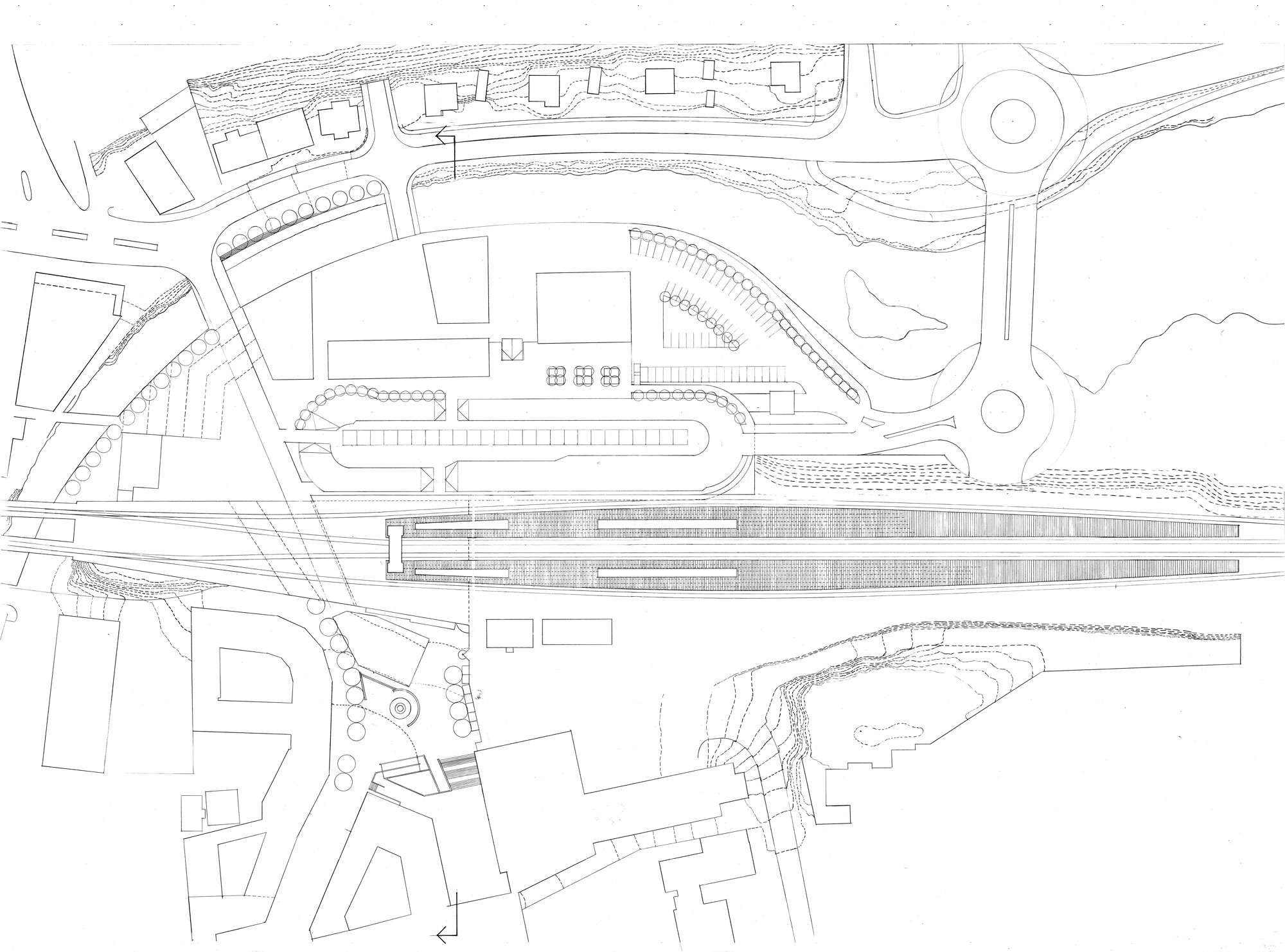
Sandvika, som ligger ca. 15 kilometer syd for Oslo, er sentrum i en kommune med ca. 90 000 innbyggere. Kommunikasjonen med hovedstadsområdet spiller en viktig rolle. Jernbanesporet gjennom Sandvika ligger på en opphøyet voll som deler området i to. En sentral idé har vært å legge det nye
stasjonsanlegget under sporområdet for på den måten å binde de to atskilte byområdene sammen. Mot øst avsluttes Sandvikas gågate med en jernbaneplass. Mot vest er det anlagt en bussterminal med midtplattform. Den fysiske nærhet mellom jernbane, buss og taxi skaper nærmest ideelle forhold for overgangsreisende med ulike kollektivtransportmidler. I tillegg kan man fra jernbanestasjonen spasere i fotgjengerstrøk til alle byens butikker og arbeidsplasser. Jernbanestasjonens beliggenhet under sporområdet gir et spennende utgangspunkt for arkitekturen. Et viktig element er forholdet mellom togets tunge brokonstruksjoner og de lettere mellomliggende plattformkonstruksjoner. Det var naturlig at disse ble støpt i betong, som inne i stasjonen er gitt en svak hvit transparent farge (som rådhuset i Sandvika). Som en motvekt til den tyngre betongen, skaper trekonstruksjonene en intimitet og letthet i alle publikumsbeskyttende overdekninger. Trekonstruksjonene spiller også en viktig rolle som veivisere i anlegget – først i de utstrakte baldakintakene foran inngangene, og senere i bevegelsene fra det «underjordiske» stasjonsrommet og opp til plattformene der tretakene folder seg ut som paraplyer over de reisende.
SANDVIKA RAILWAY STATION
Sandvika, which is about 15 kilometres west of Oslo, is a municipal centre with some 90,000 inhabitants. Communications with the rest of greater Oslo are essential. The railway line through Sandvika is built on a raised embankment that splits the adjacent environs in two. A key idea was to place the station construction below the tracks and thus conjoin the two separate urban areas. On the eastern side a downtown pedestrian street begins from a railway square. On the western side lies a busterminal with a central platform. The close proximity between the railways, busses and taxis provides nearly ideal conditions for shuttling between various public transport systems. In addition, the passengers can walk directly from the train station to pedestrian routes leading to all the city’s shops and places of work. The train station’s location beneath the tracks was the inspirational point of departure for the architecture. An essential element is the relationship among the railway’s heavy bridge constructions and the lighter platform construction forms between them. It was natural to fashion these in concrete, which in the station has been given a thin transparent white coat of paint (harmonizing with the white Sandvika City Hall). As a counterweight to the heavier concrete, the wooden constructions create an intimacy and lightweight essence in all the coverings that protect the public from the elements. The wood constructions also play a role as directional guides within the facilities – initially in the outstretched canopies at the entrances, and later in the sweep from the
«subterranean» station hall and up to the platforms where wooden roofs unfold like umbrellas over the travellers.