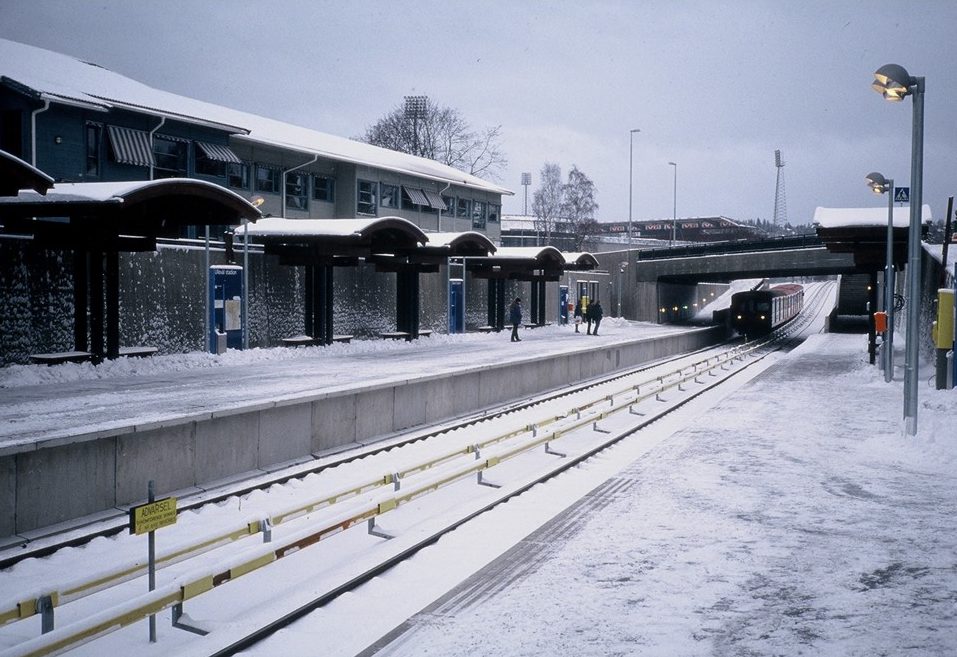
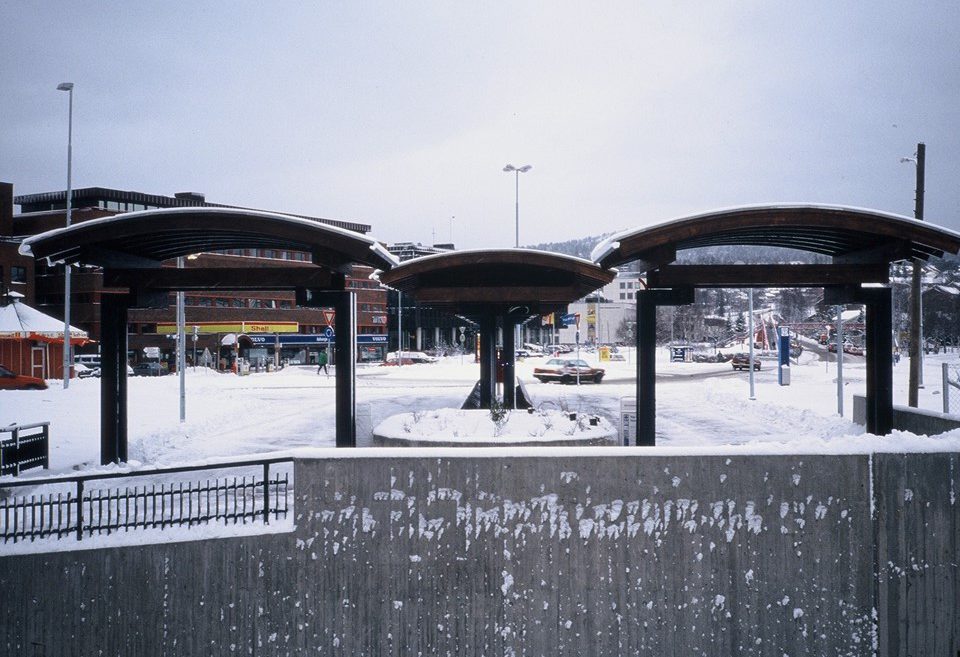
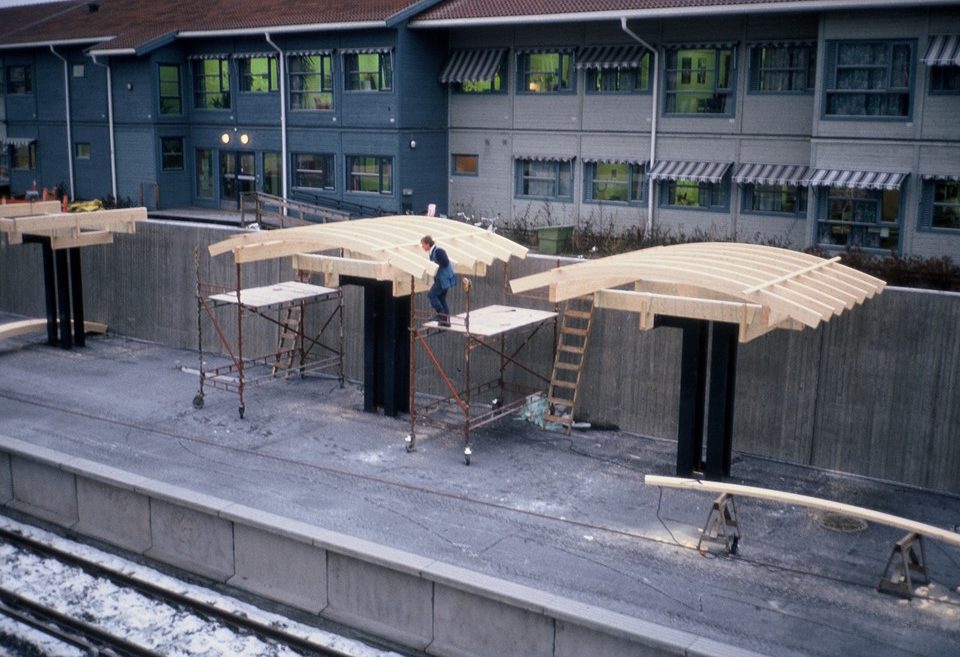

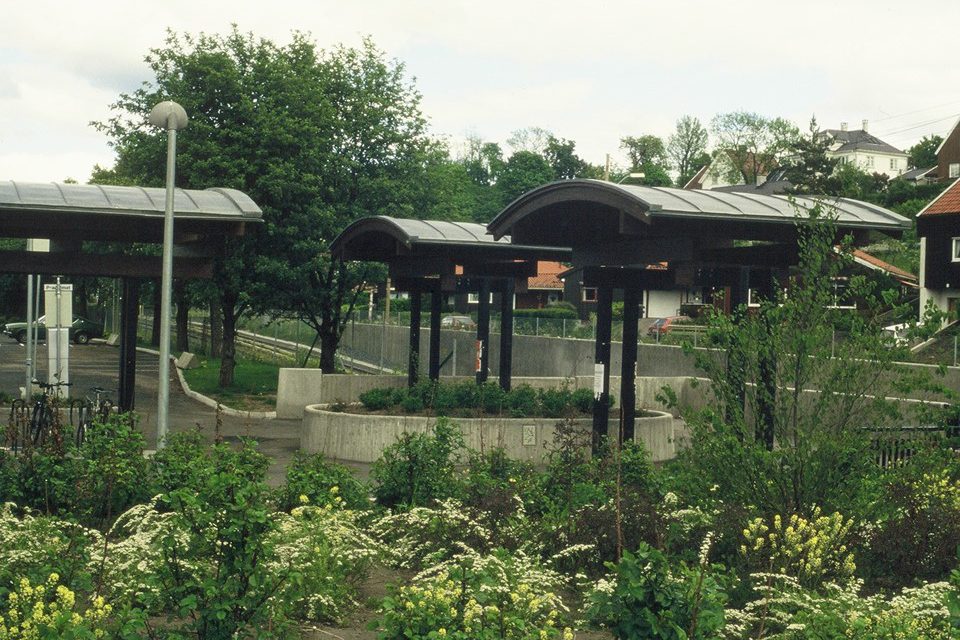


PLATFORM SHELTERS, ULLEVÅL | LOCATION: ULLEVÅL, OSLO | BUILDING TYPE: PLATFORM SHELTERS, BICYCLE PARKING | CLIENT: AS OSLO SPORVEIER | COMPLETED: 1993 | PHOTOGRAPHER: MAGNAR WESTBYE
ULLEVÅL STADION STASJON
Ullevål stadion er fremfor alt arenaen der store og viktige fotballkamper finner sted. Stasjonen ble bygget om da Sognsvannsbanen ble oppgradert til T-bane. Vi har alle et forhold til fotballspillernes lek med ballen. Her har det smittet over på leskurenes arkitektur. Leken med ballen har blitt til en lek med limtrekonstruksjoner. Fra en klynge med stålsøyler krager krysslagte bjelker ut over plattformene. Konstruksjonene avsluttet med et svevende buetak som gir beskyttelse på regnfulle dager.
ULLEVÅL STADIUM METRO STATION
Ullevål Stadium is Norway’s main venue for large and important soccer matches. The station was re-built when the Sognsvann metro line was upgraded into a subway line. Everyone can relate to a football player’s improvisation and play with the ball. This has influenced the design of the shelters. Ball play has morphed into a game with laminated wood constructions. Crossed beams project over the platforms from a cluster of steel pillars. The constructions are completed with soaring arched roofs that provide cover on rainy days.


EIDSVOLL RAILWAY STATION | LOCATION: EIDSVOLL | BUILDING TYPE: SHELTER | CLIENT: GARDERMOBANEN AS | COMPLETED: 1997 | PHOTOGRAPHER: ARNE HENRIKSEN
EIDSVOLL STASJON – LEHUS
Lehus med en grunnkonstruksjon i familie med stasjonbygningen og plattformtakene. En sammensatt limtresøyle, doble dragere og et utkraget sperretak gir til sammen en artikulert og funksjonell enhet.
EIDSVOLL RAILWAY STATION – SHELTER
The basic construction of the shelter illustrates a clear lineage with the station building and the platform roofs. A complex laminated wood pillar, double beams and a cantilevered roof truss combine to form an articulated and functional whole.


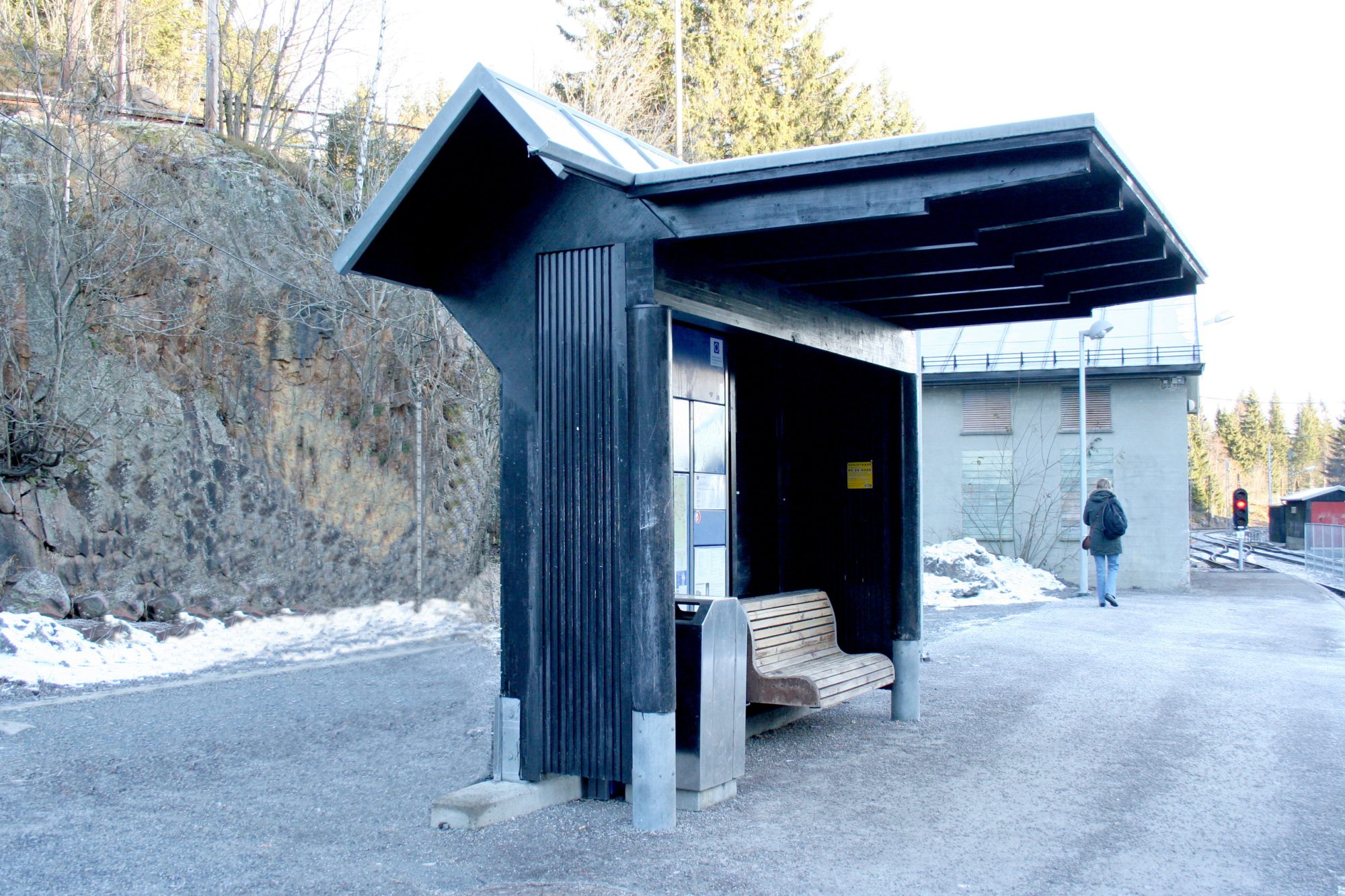
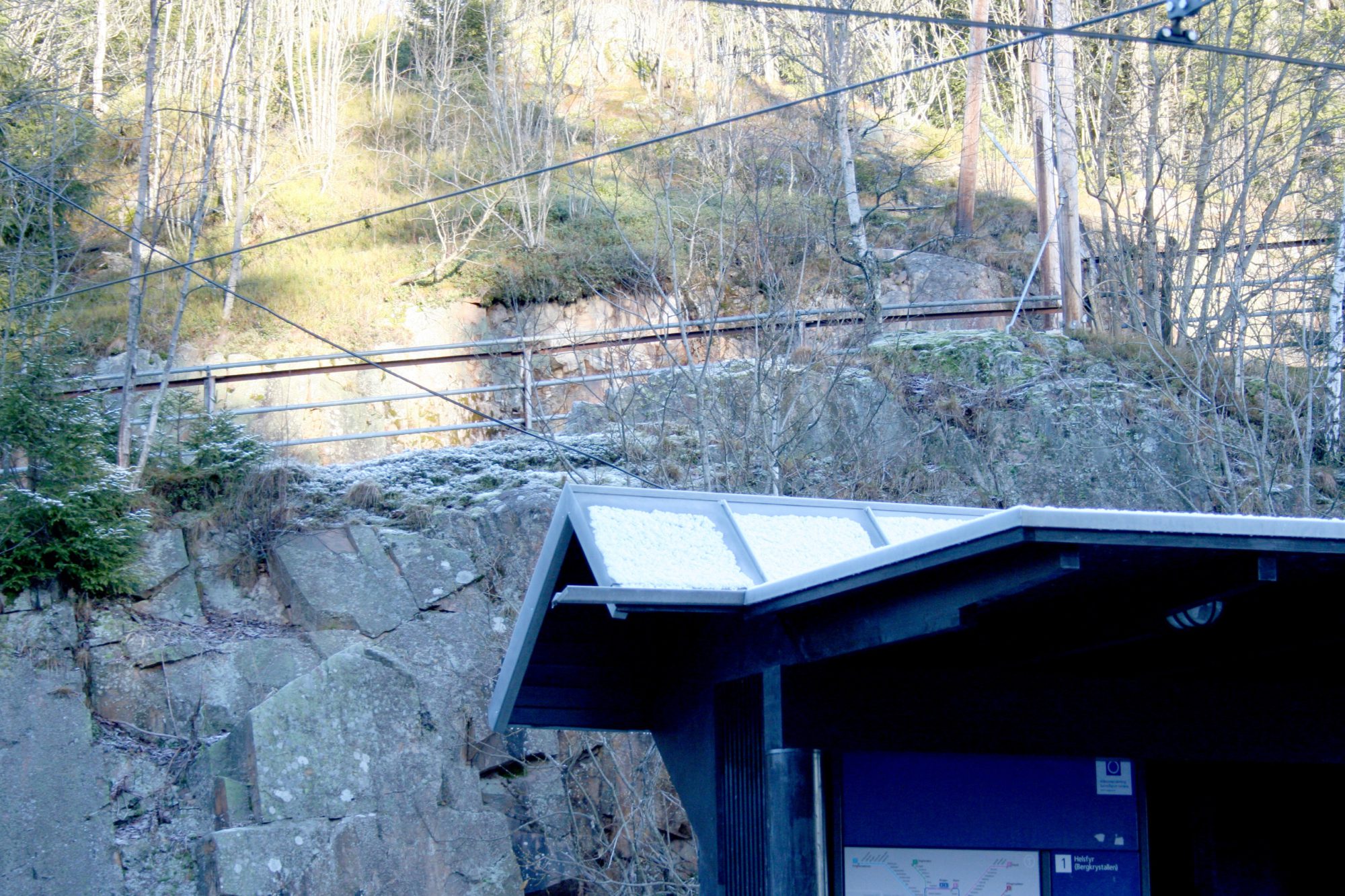

SHELTERS FOR THE FROGNERSETER METRO LINE | BUILDING TYPE: SHELTER | CLIENT: AS OSLO SPORVEIER | COMPLETED: 1993 | PHOTOGRAPHER: MAGNAR WESTBYE
LEHUS TIL FROGNERSETERLINJEN
Lehusene er resultatet av en invitert arkitektkonkurranse. De små husene har en stolpe- eller dragerkonstruksjon i forkant, og taksperrer som strekker seg ut over plattformen. Taksperrer og stolper i bakveggen føyes sammen med en karakteristisk saltaksform av kryssfinerplater.
SHELTERS FOR THE FROGNERSETER METRO LINE
These shelters are the result of an invitation to an architectural competition. The small buildings have a post or beam construction at the front and rafters stretching out over the platform. Rafters and uprights at the rear join together with a characteristic gabled form made of plywood sheets.
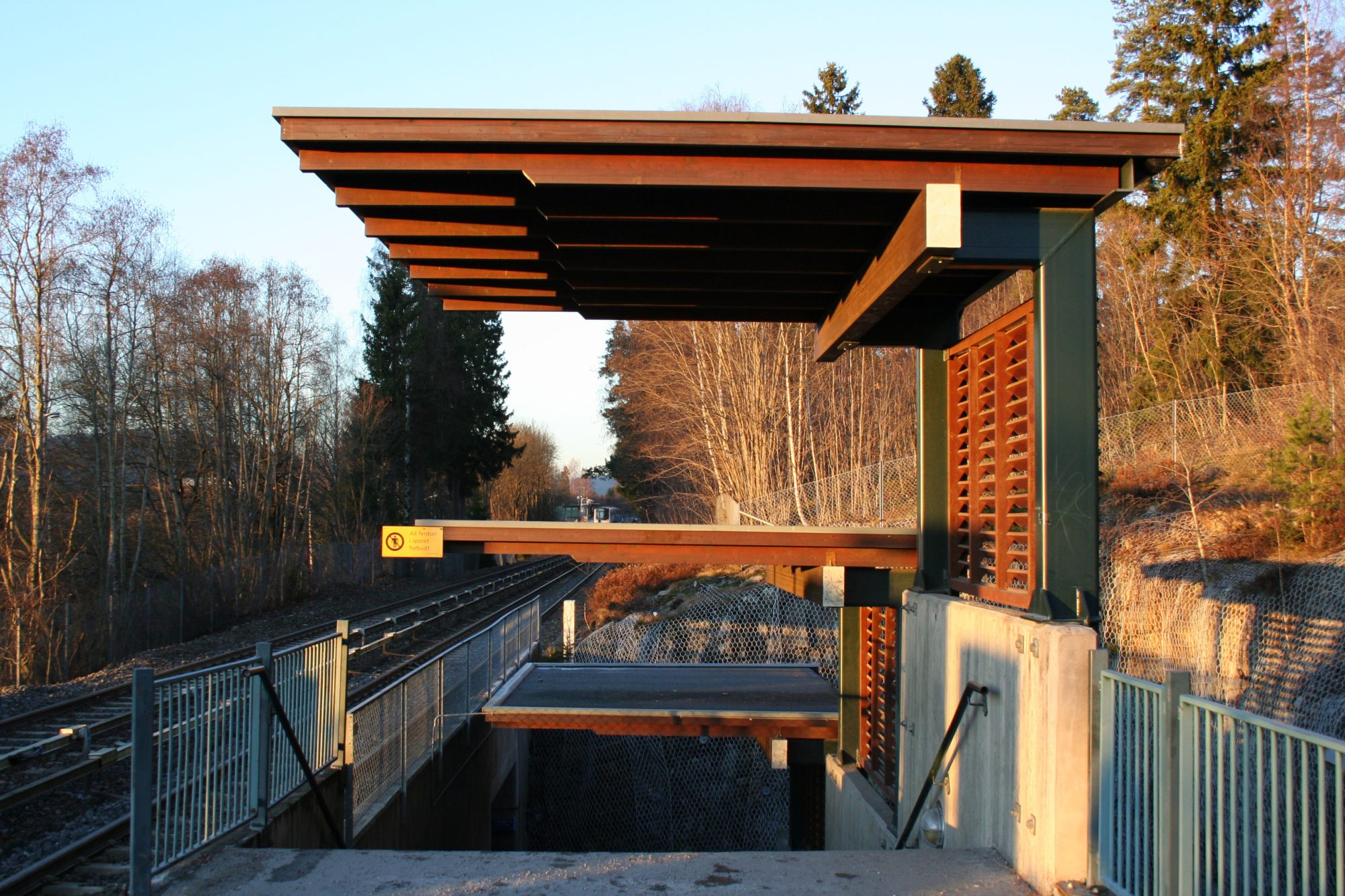

PLATTFORM BUILDING, METRO LINE SOGNSVANN | LOCATION: KRINGSJÅ, OSLO | CLIENT: AS OSLO SPORVEIER | COMPLETED: 1993 | PHOTOGRAPHER: MAGNAR WESTBYE
SOGNSVANNSBANEN
Sognsvannsbanen ble i 1993 oppgradert til T-banedrift. Det ble i den forbindelse utviklet stasjonsmøbler i form av lehus, innsynsskjermer, rekkverk og belysning. Til informasjon og skilting ble Sporveiens eksisterende designprogram benyttet. Det var et ønske at lehuset skulle ha et formmessig slektskap med designprogrammets lehus for buss og trikk (Thorsen Design). Disse har en karakteristisk 45 graders knekk i takformen. Grunnkonstruksjonen er rektangulære stålprofiler som knekker ut 45 grader i toppen. Disse er forbundet med en limtrebjelke. En stålprofil i bakkant fester det utkragede sperretaket.
METRO LINE SOGNSVANN
The Sognsvanns metro line was upgraded to accommodate subway trains in 1993. In this connection the line was furnished with new passenger shelters at the stops, as well as screen walls, railings and lighting fixtures. Oslo Sporveier’s (the public transit company’s) existing design programme was used for signs and information boards. The transit company wanted the design of the passenger shelters to fit in with those already in use for its buses, trams and other subways (Thorsen Design). These have a characteristic 45-degree bend in the roof form. The basic construction is comprised of rectangular steel profiles that bend out at a 45-degree angle at the top. These are connected with a laminated wood beam. A steel profile at the rear holds the bracketed simple roof truss.


PLATTFORM BUILDING, ROSENHOLM RAILWAY STATION | LOCATION: ROSENHOLMVEIEN, OSLO | CLIENT: NSB | COMPLETED: 1988 | PHOTOGRAPHER: ARNE HENRIKSEN
ROSENHOLM PLATTFORMHUS
På Rosenholm stasjon er det plattformer på hver side av sporene. Konstruksjonen er et søyle/dragerpar plassert i plattformens bakkant. Herfra strekker taket seg mot plattformkanten. Husene er små og uanselige på det langstrakte plattformområdet. Ved å plassere dem vis-à-vis hverandre blir de mer synlige, og plattformene bindes sammen. Takkonstruksjonenes stringente form er beiset i grå farge, mens leveggene i rødt og blått angir forskjell mellom togretningene. Plattformhuset er revet.
ROSENHOLM PLATFORM BUILDING
The Rosenholm commuter train stop has a platform on either side of the tracks. The shelter structures consist of a pair of pillars and beams on the back edge of each platform. Their roofs project from this out to the front edge of the platforms. The structures are diminutive with regards to the lengthy platform area. By placing them across from each other they gain visibility and also bind the platforms together. The roof constructions’ stringent forms are stained in a grey colour, whereas the shelter walls in red and blue indicate the directions in which the trains run. The building is demolished.


PLATFORM BUILDING HAUKETO | LOCATION: NEDRE PRINSDALSVEI, OSLO | BUILDING TYPE: PLATFORM BUILDING | CLIENT: NSB | COMPLETED: 1987 | PHOTOGRAPHER: ARNE HENRIKSEN
PLATTFORMHUS HAUKETO
På Hauketo er det bygget en ny felles plattform for tog og buss. Bussene fra boligområdene omkring skal ikke lenger stå i køen på Mosseveien, men slippe sine passasjerer på toget det siste stykket inn til sentrum. Plattformhuset på Skøyen ble til en ensom mann, like ensom som Leonardos evig innskrevne mannsfigur. Oppgaven på Hauketo ble derfor å konstruere to «kvinnelige» figurer som kunne bære hvert sitt tak. I tillegg ble det plassert en liten bygningskonstruksjon innunder taket med levegger og sittebenk.
PLATFORM BUILDING HAUKETO
The Hauketo Station has a mutual platform for trains and buses. The intention was to prevent buses serving nearby residential areas from getting snarled in traffic on the busy arterial Mosseveien, a road leading to Oslo from the south. At Hauketo passengers transfer to a train ride taking them downtown. The platform building at Skøyen became a lonesome man, as companionless as Leonardo’s inscribed male figure. The Hauketo job involved constructing two «female» figures, each supporting a separate roof. A small construction was also placed under the roof with a bench for sitting and panels to protect against the wind.


PLATFORM HOUSE SKØYEN LOCATION: SKØYEN RAILWAY STATION, DRAMMENSVEIEN 157, OSLO
BUILDING TYPE: PLATFORM BUILDING: NSB COMPLETED: 1988 PHOTOGRAPHER: ARNE HENRIKSEN
PLATTFORMHUS SKØYEN
Grunnleggende i ethvert arkitektsinn er Leonardo da Vincis proporsjonsstudie. Fra en tilværelse innskrevet i en sirkel og et kvadrat har denne stirrende mann forfulgt Arne Henriksen. Le Corbusier konstruerte en ny mann med hånden hevet til 226. Denne figur med menneskets grunnleggende mål ble utgangspunktet for den moderne arkitektur. I vår tid har 240 blitt et mål på en høyde vi alle har rett til. En jernbanearkitekt kan stille seg følgende spørsmål: «Er det mulig å konstruere et lite plattformhus?» Konstruksjonen skal være kroppslig som Leonardos mann. Den skal innskrives i en sirkel og et kvadrat basert på 240. Er det videre mulig å uttrykke konstruksjonen i farger inspirert av den eldgamle kinesiske fargetradisjonen om det bærende og det bårede? Hvorfor Leonardo, og hvorfor Kina? På et slikt spørsmål finnes det ikke annet svar enn den bygde konstruksjon.
PLATFORM BUILDING SKØYEN
A fundamental aspect of any architectural stance is Leonardo da Vinci’s study of proportions. His Vitruvian Man, staring at us from his existence inscribed within a square and a circle has continued to haunt Arne Henriksen. Le Corbusier constructed a new archetypical man with his hand raised to a height of 226 cm. This figure, with its measurements of the basic human proportions, became a point of departure for modern architecture. In our day, 240 cm has become the height we all have a right to. A railway architect can pose the following question: «Is it possible to construct a small platform building?» The construction must be corporeal like Leonardo’s man. It must be inscribed in a circle and a square based on 240 cm. In addition, can the construction be expressed in hues inspired by the ancient Chinese colour tradition of the supporters and the supported? Why Leonardo, and why China? There’s no answer to such questions other than the completed construction.