

WATERFRONT – BYUTVIKLING I BJØRVIKA/BISPEVIKA
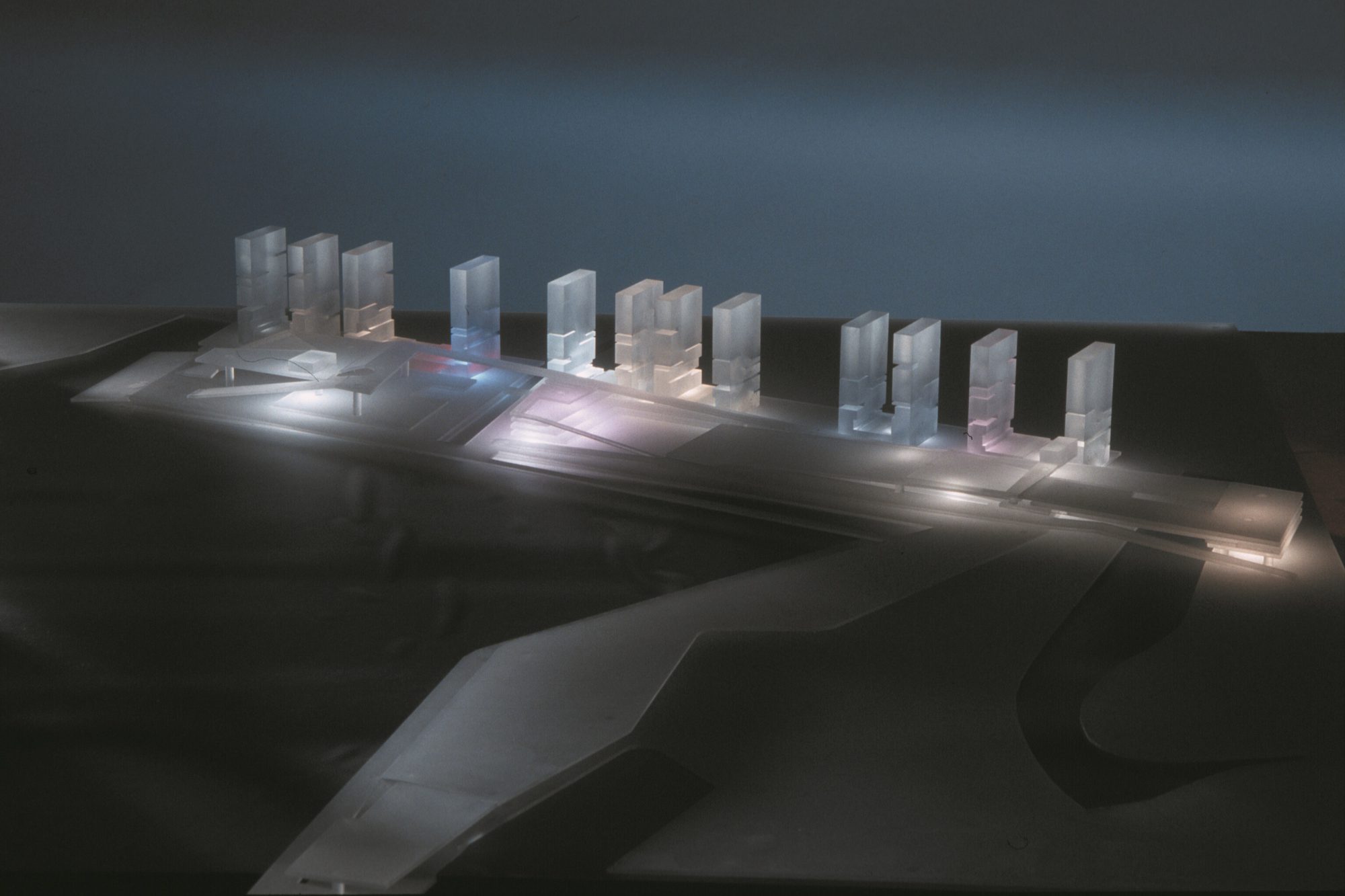
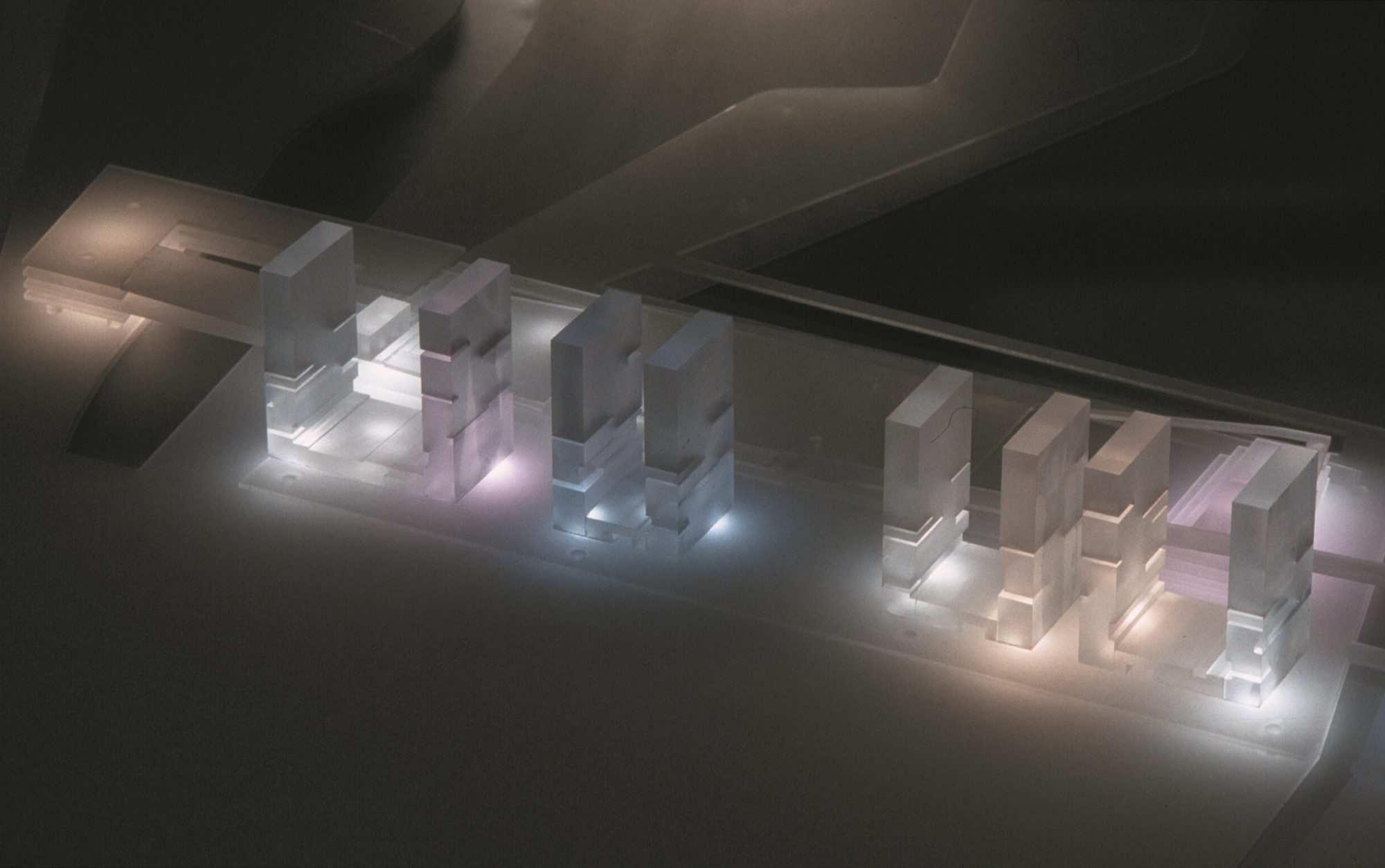
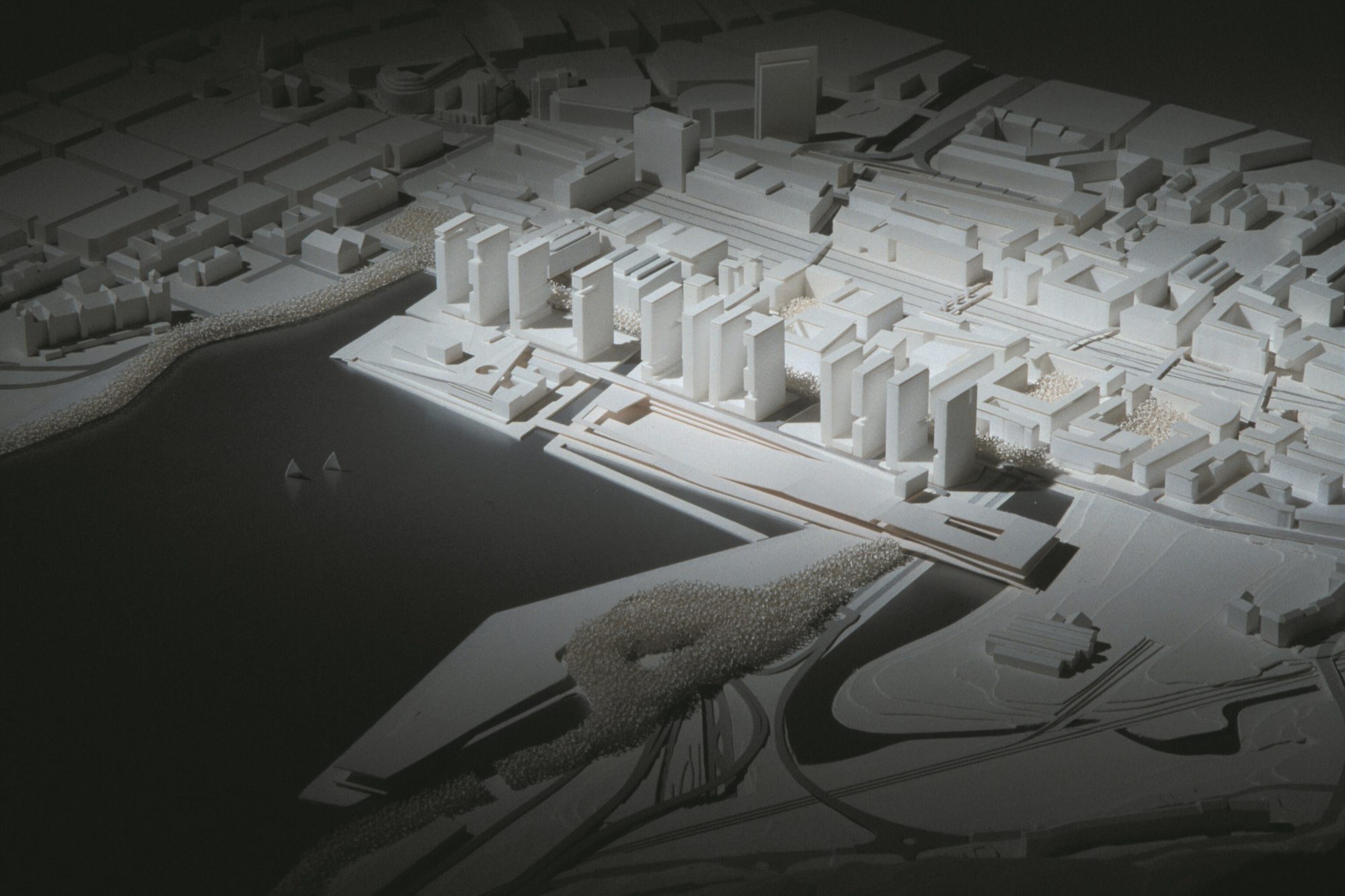
Utformet i samarbeid med Bystrup Arkitekter MAA MDD. Konkurranseutkastet er resultat av en forutgående prekvalifisering da fire team ble invitert til parallelloppdrag om en overordnet plan for utbygging av Bjørvika og Bispevika. Reguleringen av Bjørvika gir en historisk mulighet for å tilrettelegge hele havnefronten rundt Bjørvikabassenget til offentlig bruk, til glede for Oslos befolkning. Operabygningen inviterer publikum til å ta de store takflatene i bruk. Dette oppadstigende og buktende planet er tenkt videreført fra Akerselven til Middelalderparken der det avsluttes med et kulturhus: en arena for alle typer folkelige arrangementer og aktiviteter – en slags moderne folkepark. I øst, der motorveien dukker ned under Bjørvika, er området ment utformet som en park der kunstig oppbygde landskapsformer både aksentuerer og demper virkningen av veianlegget, men slik at det hele fremstår som en type «land-art». Sørenga knytter seg til denne landskapsutformingen, men fremstår mer som en park med grønne plener og skyggefulle trær. Mot syd formes den til en grønn tunge omgitt av vann, med et akvarium ytterst på neset. Parkdraget legges med svak helning mot vest som gir muligheter for en sammenhengende sandstrand fra Operaplanet i nord til Akvariet i sør – en strand der voksne og barn kan bade – et synlig bevis på at Oslo er en by med rent vann. Massene som fjernes fra Sørenga deponeres til fjordbyens fremtidige kaier og den nye parken og promenaden langs Rivierkaia. Promenaden inngår i en park beplantet med trær og møblert med benker – et stillferdig og kontemplativt sted mellom festningsmurene og havnebassenget. Sammen med Stranden i øst skapes det to landskapelige og grønne flanker i Bjørvikabassenget. Nylandstårnene representerer en type bybolig som kan bli svært attraktiv. Bygningsmessig og arkitektonisk består de av en sokkel med to oppstikkende tårn. Ved at de to tårnene er koplet sammen på gateplan, gir bygningsanlegget assosiasjoner til en «stemmegaffel». Denne musikalske assosiasjonen harmonerer godt med våre tanker om hvordan et slikt bybolig-tårn kan utformes og artikuleres. Tanken er at det langs Nyland allé etableres tolv stykk boligtårn som parvis er forbundet med en tre etasjes sokkel. Hvert tårnpar har sin individualitet i størrelsen på mellomrommet mellom tårnene og i hvordan disse er forbundet og strukturert. Avstanden mellom hvert tårnpar er også variert, noe som gir den samlede tårngruppen en bestemt rytme og en karakteristisk silhuett. De to–tre etasjer høye soklene henvender seg i første rekke til Nyland allé med butikker, kontorer og andre serviceinstitusjoner. De skaper samtidig viktige byrom i passasjene mellom Nyland allé og Operaplanet. Boligtårnene er tenkt utformet på samme måte som et gaterom, bare stilt på høykant. De samme romlige kvaliteter som man finner i gode byrom, med forhaver, altaner, et rikt artikulert fasadeliv – de vil man kunne etablere i rommet mellom to tårn. Man kunne videre tenke seg at dette mellomrommet fikk tillagt en rekke fellesfunksjoner og dermed fikk preg av et frodig sosialt fellesskap, mens den ytre delen fikk et mer privat uttrykk med individuelle balkonger og terrasser. Matrialmessig og arkitektonisk kan tårnene være i tegl med store utsparinger og artikuleringer i stål, tre og glass. Tårnene er 25 etasjer høye.
WATERFRONT – URBAN DEVELOPMENT BJØRVIKA/BISPEVIKA
Submitted in cooperation with Bystrup Arkitekter MAA MDD. This competition proposal was the result of previous pre-qualification when four teams were asked to submit parallel concepts in an overall development plan for the Bjørvika and Bispevika areas of the Oslo Harbour. Development of Bjørvika provides the historic opportunity to make the entire waterfront around the Bjørvika Bay accessible to public use, to be enjoyed by Oslo residents. The Opera Building has invited crowds people to make use of its roof surfaces. The idea here is to transpose these rising and winding surfaces, carry them over from the Akerselva River to the Medieval Park, which would terminate the connection with a cultural building: an arena for abundant activities – a modern public park. To the east, where the freeway dips down into a tunnel below Bjørvika, the area would be developed as a park with artificially raised landscaping to accentuate as well as curb the effect of the road facilities. This would be made into what could be designated as «land art». Sørenga would be attached to this landscaping development but would act as more of a park with rich green lawns and shady trees. Towards the south a green jetty would be created, surrounded by the sea and sporting an aquarium at the point. The park property would be built with a gentle slope dropping toward the west, providing the opportunity for a continuous sandy beach from the Opera plane in the north to the aquarium in the south. This would be a beach where the public could bathe – palpable evidence that Oslo is a city with clean water. The landfill that would be removed from Sørenga could be moved nearby to create the Fjord City’s future quays and the new park and promenade along the Rivier Docks to the east. The promenade would be part of a park planted with trees and equipped with benches – a quiet and contemplative place between the fortress walls and the harbour. Two landscaped green areas would then flank the Bjørvika Bay.
The Nylands Towers would be a highly attractive type of residence. Constructionally and architecturally they each consist of a pedestal beneath two soaring towers. By joining the towers at the street level, this building complex invites associations with a tuning fork. That musical association harmonizes well with our thoughts on how such a highrise apartment building can be shaped and articulated. The plan would be to build 12 of these apartment towers, six pairs along Nylands Allé, each connected with a three-storey base pedestal. Each pair of towers would have their own identity; the plan is for individuality in the magnitude of space between the towers and in the way they are connected and structured. The distances between the individual pairs of towers would also differ, thus empowering the entire cluster of towers with a rhythm and a characteristic silhouette. The two- to three-storey tall pedestals would primarily address themselves to Nyland Allé with stores, offices and other service institutions. Simultaneously these would create an urban space in the passages between Nyland Allé and the Opera plane. The residential towers would be designed in much the same way as a street space, but tipped on edge. The same spatial qualities that one finds in better urban spaces, with front gardens, balconies and a richly articulated façade life – these could all be established in the space between the towers. Furthermore, one could imagine that this vertical space could be given an array of mutual functions and thus promote a sense of rich social community, whereas the outer side would be given more of a private expression with individual balconies and terraces. Materially and architecturally, the towers could be in brick with large recesses and articulations in steel, wood and glass. The towers would be 25 storeys tall.